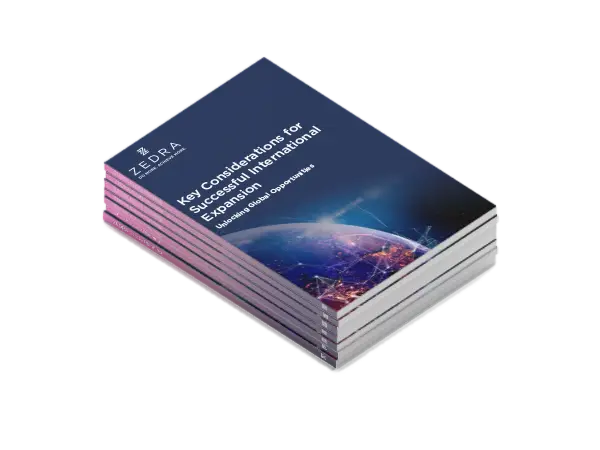
Consolidated Global Entity Management Services
Keeping track of your global entities shouldn’t feel like decoding a secret operation – but when every country has its own rules, it can seem that way.
Global entity management services means overseeing every legal, tax, payroll, and compliance obligation across all the countries where your company operates, through one coordinated framework. It ensures every subsidiary meets local regulations whilst maintaining consistent global standards, reducing administrative risk, and freeing leadership to focus on growth.
As international operations expand, so do the challenges of multi-country compliance and cross-border oversight. What begins as a few overseas entities can quickly become a web of local providers, each operating with its own unique systems, timelines, and reporting standards. The result? Fragmented governance, duplicated costs, and a lack of clear visibility into performance and compliance status.
For Chief Financial Officers (CFOs) and Chief Operating Officers (COOs) managing this complexity, it means spending more time coordinating service providers than driving strategic priorities. Fragmented outsourcing creates silos, payroll handled by one partner, accounting by another, HR elsewhere, with no single point of accountability.
A one-stop corporate service provider like ZEDRA solves this by consolidating everything under one framework. From entity registration to payroll and HR management, ZEDRA brings together legal, tax, and operational support through a single transparent structure that scales with your growth.



Why do global operations become fragmented?
When companies scale internationally, complexity doesn’t grow linearly, it multiplies. Each new jurisdiction adds unique tax laws, employment regulations, banking systems, and reporting timelines. To move quickly, many organisations build local relationships with payroll firms, legal advisers, and accountants in each market. At first, it does work, but as operations expand, so does this problem: a patchwork of providers, disconnected data, and inconsistent standards.
Without a unified framework, global oversight becomes reactive rather than proactive. Information flows through multiple intermediaries, deadlines differ by country, and leadership struggles to see the full picture of compliance or cash flow. What should be centralised corporate governance often turns into a tangle of country-specific systems and updates.
For CFOs and COOs, this fragmentation creates three major issues:
- Limited visibility – Disparate providers mean no consolidated dashboard or real-time insight into global compliance status.
- Inefficient coordination – Multiple touchpoints and contracts create administrative drag and delay decision-making
- Inconsistent standards – Each jurisdiction applies its own approach to payroll, HR, and accounting, eroding governance and audit readiness.
The result is an ecosystem that consumes both time and budget; not because the work is wrong, but because it’s scattered. Fragmented operations slow growth, obscure risk, and drain focus from higher-value strategy. Fragmentation doesn’t just increase complexity – it multiplies uncertainty.
What should a one-stop global partner deliver?
Once global operations reach a certain size, adding yet another local provider rarely solves the problem – it compounds it. What global leaders really need isn’t more service partners, but one accountable partner who integrates everything under a single framework.
A one-stop corporate services provider should deliver four main outcomes:
- Unified processes across payroll, HR, accounting, and tax
Every jurisdiction operates on the same principles – consistent calendars, aligned reporting formats, and shared compliance standards. This eliminates the duplication and data silos that arise when each market uses a different system. - Centralised governance and accountability
Instead of multiple points of contact, a single relationship manager coordinates all jurisdictions. This ensures that updates, filings, and performance data flow into one clear line of communication, enhancing transparency and accountability. - Predictable costs and scalable delivery
Consolidation isn’t just about efficiency, it’s about financial clarity. Transparent pricing models and defined service levels allow leadership to forecast costs and scale smoothly as new markets are added. - Consistent experience in every country
Global operations shouldn’t feel different in each jurisdiction. A unified provider aligns local expertise under one governance model – from pension administration to payroll – giving employees and management the same level of quality, no matter the market.
True global management isn’t about covering every country – it’s about connecting them. A well-designed corporate consolidation service like this does more than simplify reporting. It redefines centralised corporate governance, transforming compliance from a reactive obligation to a proactive one.
How ZEDRA delivers global consolidation
For many organisations, global consolidation sounds abstract – until they experience it in action. At ZEDRA, it starts with structure, but it’s defined by outcomes: fewer moving parts, faster reporting, and complete confidence in compliance.
Rather than simply coordinating providers, ZEDRA embeds a global operating rhythm into each client’s business. A dedicated relationship lead manages communication across every jurisdiction, supported by local specialists who execute according to unified standards. This model turns a network of vendors into a single, high-performing global team.
Behind that partnership sits ZEDRA’s data-driven platform. It doesn’t just collect numbers, it turns them into visibility – consolidated dashboards that track filings, payroll accuracy, and compliance status across all markets in real time. CFOs see exactly where they stand, without waiting for quarterly summaries or chasing regional updates.
Where most large consultancies apply rigid playbooks, ZEDRA adapts to fit each company’s footprint. The approach scales with expansion or contraction, offering tailored service levels without sacrificing consistency. The result is control that feels personal, not procedural. Through this delivery model, ZEDRA gives growing international businesses a structure that replaces coordination with clarity – turning complexity into confidence.
Core services that underpin consolidation
The power of consolidation lies in connection – how each operational layer supports the next. ZEDRA’s global entity management framework integrates accounting, payroll, HR, and compliance into one continuous process. This creates a single and verifiable flow of data and governance.
At its base is entity management, ensuring every subsidiary’s records filings, and structures remain accurate across jurisdictions. From there, accounting and payroll integration brings financial consistency: one chart of accounts, aligned reporting cycles, and payroll data that feeds directly into consolidated statements.
HR and compliance oversight complete the picture. Local labour frameworks, benefits, and tax obligations – including standardised employee policies – are monitored within the same system, giving leadership a live, cross-border view of people and performance.
This isn’t a collection of separate services, it’s an ecosystem. Each layer strengthens the next: HR informs payroll, payroll reconciles with accounting, and accounting validates compliance. One data stream replaces dozens of disconnected processes. When every function speaks the same language compliance becomes culture – not crisis management.
How ZEDRA streamlined operations across three European markets
A Massachusetts-based telecommunications company providing VOIP networks to over 150 customers in 50 countries faced a challenge familiar to many rapidly scaling businesses: their existing operations in France, Germany, and the UK had become inefficient and costly. Despite technical success – carrying nearly 40% of all global IP-voice traffic – their back-office operations were fragmented across multiple providers and systems.
The company’s leadership sought a partner who could improve cost-effectiveness whilst supporting continued international expansion. They needed more than just compliance coverage – they needed someone to streamline the financial, reporting, and operational complexity that was slowing decision-making and consuming management bandwidth.
ZEDRA began by consolidating the financial operations across all three markets. Improved record-keeping, unified treasury management, and standardised reporting replaced the previous patchwork approach, immediately saving considerable time and money. ZEDRA then supported an internal business process review that tightened controls and mitigated risk across the regional operations.
As the business continued to grow, ZEDRA created a detailed regional reporting system with increased data analysis – ensuring consistency between regional procedures and group policies. The team improved purchasing processes, minimised external audit costs by preparing regional financials to US reporting standards, and managed a meticulous tax and accounting due diligence investigation for the company’s largest EMEA technology acquisition.
ZEDRA completed a multiple-entity, multiple-period taxation review that yielded significant tax and VAT refunds. As expansion continued, ZEDRA’s framework scaled seamlessly – eventually supporting seven EMEA territories through coordinated payroll and local tax compliance management.
The outcome wasn’t just operational efficiency. By consolidating and streamlining back-office complexity, ZEDRA enabled the management team to concentrate on core activities, develop the business, and deliver growth in profits and market share. What began as an effort to improve three countries became the foundation for controlled, confident expansion across an entire region. (Read the full case study here).
Five steps to achieving consolidation success
Consolidating global operations isn’t just an overnight exercise, it’s a structured transition from fragmentation to consolidation. The most successful projects share a common sequence: diagnose, define, align, transition, and optimise.
- Audit your current landscape
Start by mapping every active provider, contract, and compliance responsibility across jurisdictions. This diagnostic stage reveals overlaps, inefficiency, and unseen risks – from duplicated filings to inconsistent accounting policies. - Define the consolidation scope
Determine which functions and regions should fall under a unified framework first. Many organisations begin with payroll and compliance, then phase in accounting and HR once systems are stable. - Align on standards and reporting
Create a governance blueprint – how data flows, how reporting cycles sync, and who owns each decision layer. This alignment ensures every market operates to the same quality and accountability standards. - Transition under one Service Level Agreement (SLA)
Migrating to a single SLA creates a single version of accountability. With ZEDRA, that includes centralised oversight and jurisdiction-specific execution teams who maintain local compliance while reporting globally. - Monitor and optimise continuously
Consolidation isn’t static. Review performance quarterly, tracking time savings, compliance metrics, and cost efficiencies. Over time, these insights drive continuous improvement, not just operational stability.
Consolidation isn’t a checklist, it’s a change in how your organisation operates globally. When delivered with the right partner, it transforms administrative overhead into strategic visibility. Each step, from audit to optimisation, moves leadership closer to a single, confident view of the business – the foundation for every global decision that follows.
Why choose ZEDRA over large consultancies
For many CFOs, working with a large consultancy can feel like managing another corporate machine. Delivery models are rigid, communication filtered through ticketing systems, and solutions often designed to fit the provider – not the client. ZEDRA was built to be the opposite: hands-on, flexible, and genuinely accountable.
The decision between outsourcing and in-house management often comes down to flexibility and accountability. Where global firms apply standardised templates, ZEDRA applies judgement. Every engagement is designed around the client’s structure, not a pre-set framework. That means faster onboarding, fewer layers of approval, and direct access to specialists who know your business.
Clients often describe ZEDRA as an extension of their internal team rather than an outsourced function. Communication is direct, response times are fast, and updates are transparent. When something needs escalation, you’re not routed through multiple departments, you speak to someone who owns the outcome.
Another difference lies in scalability. Large consultancies tend to grow by adding complexity; ZEDRA scales by simplifying it. As your entity footprint expands, service levels adapt seamlessly – whether you’re entering a new jurisdiction or consolidating mature operations.
Big doesn’t always mean better. In global operations, agility outperforms bureaucracy every time.
As a result, what this delivers is confidence, not just in compliance, but in the partnership itself. ZEDRA clients gain a structure they can trust, and a relationship they can rely on.
What success looks like
Success in global entity management isn’t measured in filing or reports, it’s measured in clarity. When operations are consolidated under one structure, leadership gains control, confidence, and the freedom to focus on growth rather than coordination.
In a truly unified model, data flows seamlessly between teams and territories. Every subsidiary follows the same governance rhythm, every report draws from the same verified source, and every compliance event is visible before it becomes urgent. Instead of reconciling regional updates, leadership reviews a single, consistent global picture that is both current and actionable.
Now, finance teams can spend less time checking numbers and more time interpreting them. HR leaders no longer juggle local variations or missed filings. Cross-country reporting becomes a strategic tool, not an administrative burden. The entire organisation operates from the same foundation of trust and transparency.
CFOs who’ve completed this transition often describe it as moving from firefighting to forecasting. Compliance stops being a moving target; visibility becomes continuous. The business gains agility – entering new markets faster, adjusting with confidence, and growing without losing control.
When that happens, global management stops feeling like maintenance and starts driving momentum. The business runs on one version of the truth: reliable, scalable, and ready for what’s next.
Your next step towards unified global management
The complexities of international operations don’t resolve themselves as they compound over time. Fragmented providers, inconsistent reporting, and reactive compliance quietly drain leadership bandwidth and creates avoidable risk. The shift to a consolidated global model is not just an operational movement; it’s a strategic turning point.
ZEDRA helps companies make that transition with clarity, structure, and hands-on partnership. Whether you’re managing five entities or fifty, the goal is the same: one governance rhythm, one dependable data source, and one relationship you can trust.
If you’re ready to reduce administrative strain, improve oversight, and regain control of your global footprint we’re here to guide the process step-by-step, at your own pace, whilst backed by deep jurisdictional expertise.
Speak to a Global Expansion Advisor today. A short conversation can clarify where consolidation delivers the best impact and what your transition could look like in practice.
Frequently Asked Questions
Global entity management means overseeing a company’s legal, tax, and operational compliance across multiple countries through one coordinated framework. It ensures every subsidiary meets local requirements whilst maintaining consistent global standards, reducing administrative risk and freeing leadership to focus on growth.
A one-stop corporate services provider handles payroll, accounting, HR, compliance, and governance under a single point of contact. This eliminates the silos created when different partners manage each function separately, providing unified reporting, consistent standards across jurisdictions, and one accountable relationship instead of multiple disconnected vendors.
Each jurisdiction adds unique tax laws, employment regulations, and reporting timelines. Companies often hire local providers in each market, creating a patchwork of disconnected systems. Without unified oversight, information flows through multiple intermediaries, deadlines differ by country, and leadership lacks visibility into compliance or cash flow.
Fragmented outsourcing creates three core issues: limited visibility with no consolidated dashboard for global compliance status, inefficient coordination as multiple touchpoints delay decision-making, and inconsistent standards where each jurisdiction applies different approaches to payroll, HR, and accounting. The work consumes time and budget whilst obscuring risk.
A telecommunications company with fragmented operations across France, Germany, and the UK consolidated under ZEDRA. The unified framework streamlined financial operations, created standardised reporting, improved purchasing processes, and delivered significant tax and VAT refunds. The framework then scaled to support seven EMEA territories, allowing management to focus on profit growth.
First, audit every provider and compliance responsibility to reveal overlaps and risks. Second, define which functions move to unified framework first. Third, align on governance standards and reporting. Fourth, transition under one service agreement with centralised oversight. Fifth, monitor performance quarterly to track time savings, compliance metrics, and cost efficiencies.
Large consultancies apply standardised templates and filter communication through ticketing systems. Specialist providers like ZEDRA design services around your structure, provide direct specialist access, and scale by simplifying complexity rather than adding layers. This delivers faster onboarding, transparent updates, and someone who owns outcomes rather than processing requests.