Luxembourg Funds Industry Outlook: 5 Trends Shaping Private Markets, AI and Private Wealth
22 September 2026

Luxembourg has built its position as a leading funds domicile by staying ahead of change.
As private markets evolve, technology advances and investor expectations shift, adaptability remains crucial.
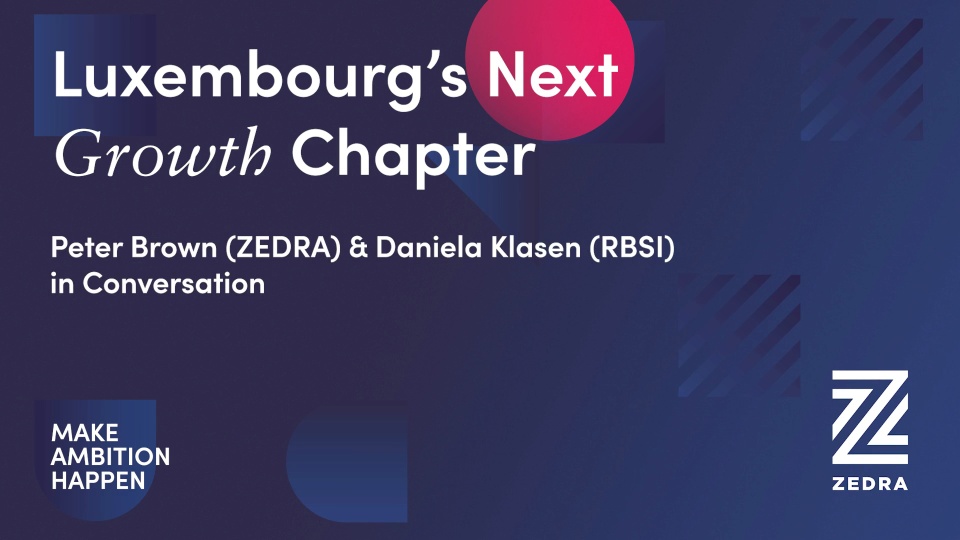
In a recent discussion, Peter Brown, Head of Funds, Europe and Daniela Klasen-Martin, Country Head of Luxembourg at RBSI, explored the opportunities and challenges shaping the next phase of developments in the funds industry.
Here are five key takeaways from their conversation.
1. Growth opportunities remain strong despite a challenging backdrop
Geopolitical uncertainty, economic pressures and market volatility are creating challenges across the investment landscape. Yet the long-term growth story for private markets remains strong.
Demand continues to be driven by investors seeking access to alternative sources of return, while innovation is creating new opportunities for fund managers. Increasingly, attention is shifting from managing uncertainty to identifying where future growth is most likely to emerge.
Areas such as private credit, renewable energy, venture capital and technology-focused investments are continuing to attract significant interest, creating opportunities for managers able to respond to evolving investor priorities.
2. Private wealth could become a major driver for future capital raising
For many years, private markets have been largely the domain of institutional investors. Today, the industry’s attention is increasingly turning towards private wealth.
Expanding access to private market strategies could unlock significant new pools of capital, but doing so will require more than regulatory change alone. Distribution models, onboarding processes and reporting all need to evolve if fund managers are to successfully attract and service this growing investor segment.
3. Operational efficiency is becoming a competitive advantage
As costs, reporting requirements and investor expectations continue to rise, fund managers are placing greater emphasis on the efficiency of their operating models. Increasingly, the focus is moving beyond scale and outsourcing towards process simplification, automation and smarter ways of working overall.
The challenge is achieving these gains while continuing to deliver the levels of service, oversight and responsiveness that investors expect.
4. Data will determine who benefits most from AI
Artificial intelligence and its widespread application remains one of the defining topics in financial services globally.
However, successful adoption depends on foundations that are often less visible. For many organisations, it starts with data. Data quality, governance and accessibility will play a significant role in determining how effectively firms are able to deploy AI and other emerging technologies in the years ahead.
5. Talent remains at the centre of transformation
Technology is changing how work is performed, but it’s only underscoring the importance of people.
As routine processes become increasingly automated, skills such as judgement, leadership, collaboration and problem solving will become even more valuable. At the same time, organisations will need to help employees develop the skills required to work effectively alongside new technologies.
Ultimately, technology delivers the greatest value when teams have the tools, training and confidence to use it effectively.
Watch the full discussion
Amid ongoing change across the industry, Luxembourg’s ability to adapt and evolve continues to be one of its defining strengths.
Watch the full discussion to hear Peter and Daniela’s perspectives on the trends, opportunities and strategic priorities shaping the future of the funds industry.